Student Profile: Leigh Wang, Concerto Competition Winner
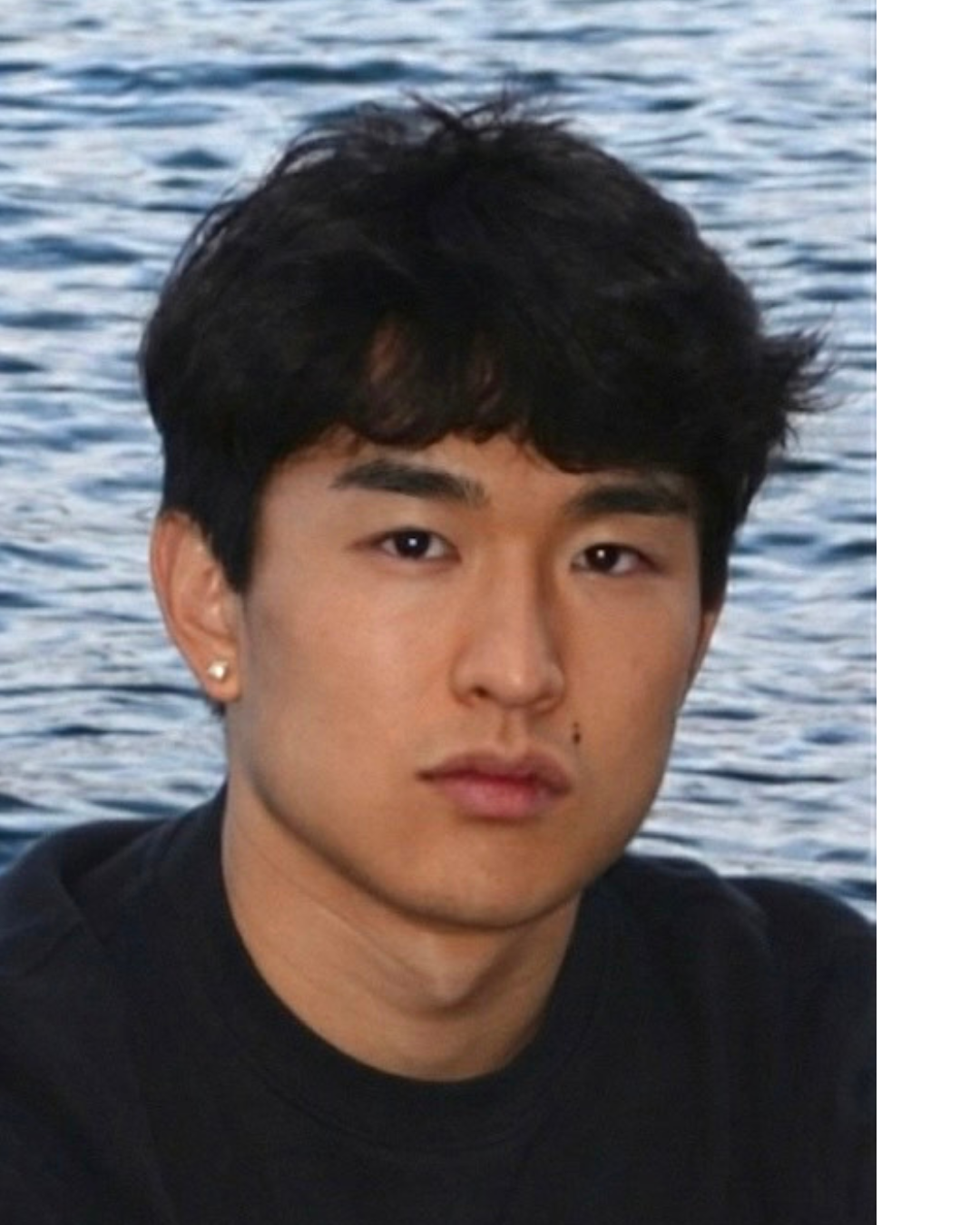 Leigh Wang, a 2025 winner of Northwestern's Concerto Competition, recently sat down for an interview about his upcoming performance of Tchaikovsky's Piano Concerto No. 1 in B-flat Minor, Op. 23. Leigh will perform with the Northwestern University Symphony Orchestra on December 6 at 7:30 p.m. in Pick-Staiger Concert Hall.
What is your fondest memory during your time at Bienen?
I’d have to say alternating between the practice room and the third floor lounge pretty much every night. In the weeks leading up to the school competitions, I knew I needed to lock in, but staying focused for extended periods of time wasn’t my strongest suit. I would somehow always meander to the lounge at least once every hour in between spurts of practice, some being more effective than others. It’s not the biggest or flashiest space, but it’s where I met a bunch of my closest friends. And although hearing about and partaking in some of the drama was always very enticing, more relevantly, I was able to intake different perspectives on classical music from even people you didn’t go in expecting to talk to, like grad students eating lunch, or cellists playing their theory homework pieces as loud as they could. I remember having an hour-long conversation about rubato there that made me run back to the practice room and experiment with new ideas, as corny as it sounds. So I remember constantly venturing in and out of my practice room. You never went to the lounge to genuinely be productive, but you might leave with a new friend, a new significant other, or anything in between. All in all, I really couldn’t have practiced well without the people there. Funnily enough, some of my least efficient practice occurred when the building was completely desolate.
What did your rehearsal process look like for this concerto, and how did you approach this piece?
I can recall cutesy Mozart and Haydn works fostering my initial love for music, but soon thereafter, I too fell victim to pieces in the likes of Rachmaninoff's Piano Concerto No. 2, Tchaikovsky's Piano Concerto No. 1, and the Chopin piano concertos. So when I started grinding this piece in January, I began with my favorite lyrical passages. It was hard to choose my favorite because the piece features a new one every few seconds, but the A-flat Major theme in the first movement and the D-flat Major theme in the third movement are tough to beat. I find myself beginning every single one of my practice sessions at these passages, so I hope you can tell how much I adore them. From there, I went about stringing together the separate patches in order to tell one comprehensive story. That being said, it’s easy to make the mistake of treating Tchaikovsky's concerto merely as a fireworks display, as it often is when dealing with pieces that present this brand of unhinged romanticism. There are many moments when the emotional truth matters even more. On Saturday, I hope to strike a convincing balance between the two.
Is there anything in particular that the audience should listen for in this concerto?
I had the privilege of studying with two professors during my time at Bienen: Professor José Ramón Méndez and Professor Christopher Guzman, and I really enjoyed my time with both of them. Every lesson, Dr. Méndez would bring up a quote or an idiom in his arsenal, not just for dramatic effect, but to really force you to take something important with you from every lesson. I still remember quite a few of them, but there was one that was especially memorable. It was not the most profound statement ever made, nor was it even an original one. He talked about how Einstein once said that “doing the same thing over and over again and expecting different results” is simply called insanity. I remember feeling a bit dismissive initially, because… obviously. But over the course of that week, I realized how it was actually a pretty direct indictment of not necessarily my playing, but my flawed approach as a whole. That led me to the practice methods I use now, and has enabled me to play a lot more fearlessly and conscientiously. Dr. Guzman and one of my mentors, Stephen Joven-Lee, helped me out tremendously too. I have learned to become more of a risk taker at the piano as a result. In addition to the big booming passages, I think the moments where the music pulls back are equally as paramount. Tchaikovsky’s quiet writing can sometimes be louder than the flashy.
How would you describe your experience at the Bienen School of Music?
Bienen was beyond anything that I could have expected. I have to give my thanks to all the people that offered me their guidance and support, even at the risk of sounding too cliche. In addition to the faculty and dual-degree program, the building and the practice rooms being as pristine as they are gave me and my peers a second home in Evanston. I also really appreciated how the school atmosphere was a well-struck balance of neighborly and competitive. The former helped me find some of the closest people in my life, and the latter simply made us get better at our instruments. Although I will not ultimately become a classical musician, I agree that we should all strive for excellence in every single one of our endeavors, and I think Bienen does a great job of promoting that. I really do feel indebted to this school for giving me the chance to further my musicianship.
What's a fun fact about yourself (it can be music related or non-music related)?
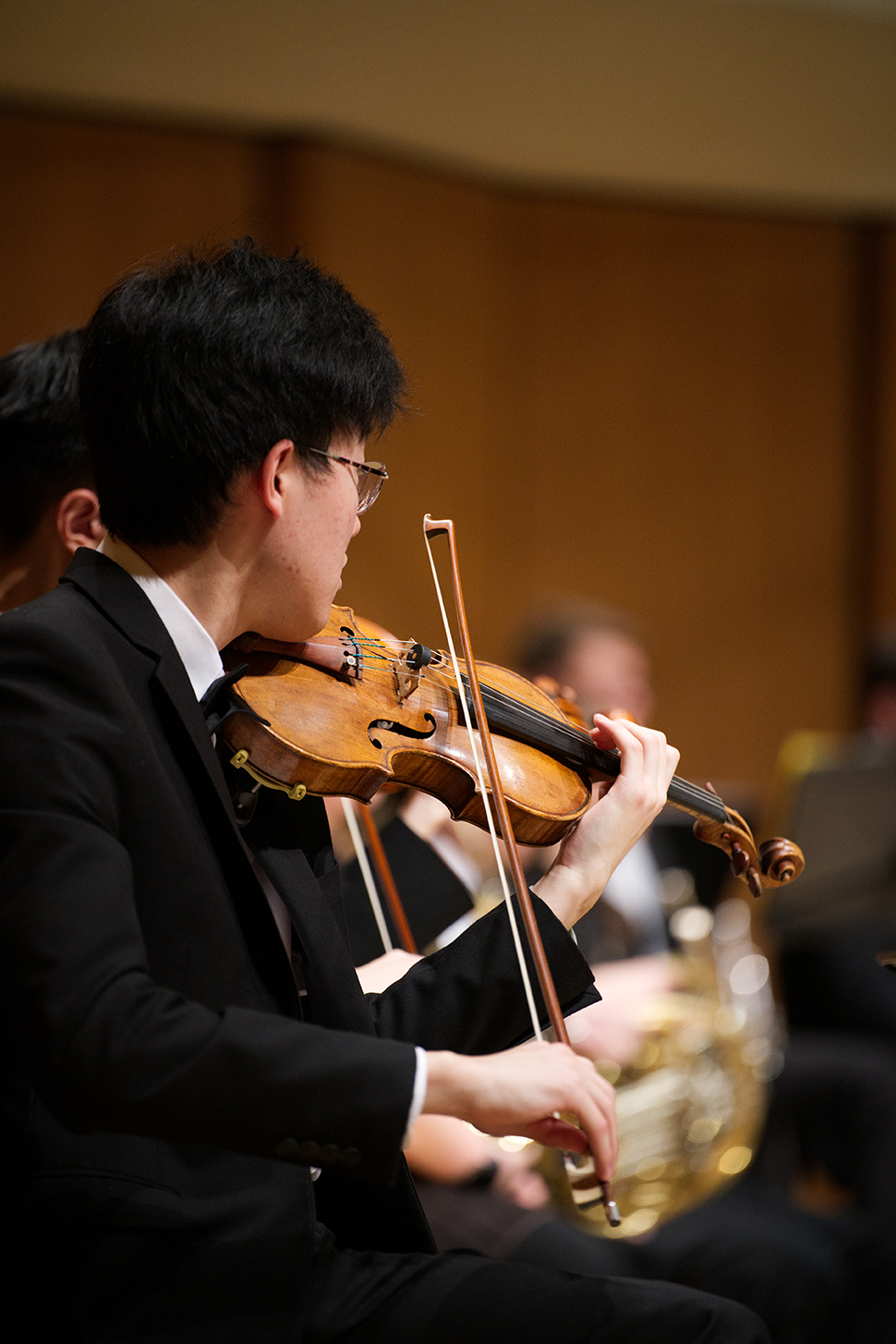
Originally my parents enrolled me in violin lessons when I was three, but because I would throw the violin, they switched me to an instrument that I couldn’t throw. Lately I’ve been working on producing my own music as a side hobby. Maybe I'll put it out in the world at some point soon. Growing up, I would tape pieces of paper together and draw my own maps. In an alternate universe, I would love to be an urban planner. I’m also a huge San Antonio Spurs and Yankees fan. And most importantly, I can whistle with my mouth open.